
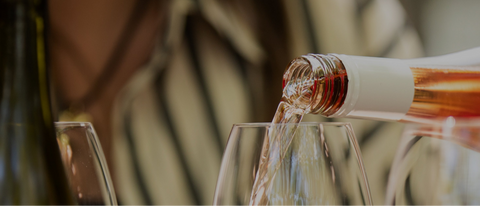
It's 10am on a Tuesday. The cellar door is open. The wines are poured. The stories are ready.
And the road is empty.
This is the quiet reality for so many Australian wineries. The product is exceptional. The provenance is genuine. But the audience — the one who would genuinely love what's in that bottle — has no idea this place exists. And they're probably not going to find it by accident.
The cellar door has always been the heartbeat of winery direct to consumer sales. There's something about tasting a wine in the place it was made, with a cellar door team who can speak to the vintage, the soil, the season. That connection is real, and it converts.
But it has a ceiling.
You can only be found by people who already know where to look. Geography, opening hours, the simple fact that visitation requires someone to actively plan a trip. For many wineries, particularly those in regional Australia, that ceiling is becoming harder to raise.
The Wine Australia 2024 Direct to Consumer Report reflects this honestly. Unique customers fell 5.8% year on year. Website sales, the channel wineries have the most direct control over, have stabilised at just 14% of DTC revenue. Cellar door accounts for 46%, wine club for 34%. Both are strong channels, but both depend on a customer who has already found you.
So the question worth sitting with is: how do you reach the people who haven't found you yet?
That's the territory paid media operates in.
The Audience Is There
While Australian wineries are working through the challenge of customer acquisition, 22.8 million Australians are active on Facebook. That is 82% of the entire population. On Instagram, there are 14.7 million users, more than half the country.
And Meta's advertising platform lets you reach them with a level of specificity that would have been difficult to imagine a decade ago. Not just broad demographics, but the sub-segment of people who are interested in premium food and wine, who have travelled to wine regions, who recently engaged with hospitality content. You can take your existing wine club members, upload their details as a custom audience, and ask Meta to find people across Australia who share a similar profile.
It is not a perfect science. But it is a meaningful one.
Then there is Google. Every time someone searches "buy Shiraz online" or "best Margaret River wine delivery," they are signalling intent. They are in the market, right now, for something you make. Google Search ads put your wine at the top of that moment. Research from Google's own economic impact reporting suggests that businesses earn an average of eight dollars in profit for every dollar spent on Google Ads. The channel rewards clarity and relevance, and wine has both.
Why Most Wineries Aren't Doing This Yet
If the tools exist and the audience is there, it is worth being honest about why more wineries aren't using them.
The Wine Australia report is clear that there is a strong and consistent correlation between marketing skills, focus and business performance. The wineries succeeding in DTC are generally the ones with dedicated resources and a defined strategy, not necessarily the ones with the most famous labels.
But most wineries are running with limited capacity. Digital marketing sits alongside a very long list of other responsibilities, and paid media specifically has a reputation for complexity. Pixels, attribution windows, audience segmentation, creative testing — the language alone can be a deterrent. Only 26% of wineries are actively hiring digital marketing employees according to the 2024 DTC Report. That means the majority are navigating this landscape without dedicated support.
There is also a real hesitancy around spending money with no guaranteed return. You cannot taste an ad. You cannot see it working the way you can see a full cellar door on a long weekend. Only 17% of organisations globally report having a clearly defined digital marketing strategy, according to Smart Insights. For small, single brand producers, that number is likely to be lower still.
The hesitancy is understandable. It is not about disinterest. It is about not yet having the confidence or the framework to know what good looks like.
What Paid Media Actually Does
There are two distinct jobs paid media does for a winery.
The first is acquisition. Finding the wine drinker who has never heard of your estate but who, if they tried it once, would probably come back. Meta's lookalike audience capability is built for this. You are not broadcasting broadly — you are using your existing customer data as a signal to find people who share similar characteristics. It is a more considered form of prospecting than many wineries have access to through other channels.
The second is retention and reactivation. And this is where the cellar door connection becomes particularly interesting.
A visit to the cellar door is one of the highest value interactions a customer can have with a winery. The experience is personal, the wine is in hand, the conversation is direct. When a visitor leaves with a bottle and an email address on a sign-in list, that is not the end of the relationship. It should be the beginning of one.
The 14% of DTC revenue coming through website and email sales does not have to stay at 14%. When cellar door visitor data is captured and uploaded into Meta as a custom audience, you can retarget those people after they have gone home. Someone who visited the Yarra Valley six weeks ago and enjoyed a tasting is a warm prospect for an online purchase. They already know the wine. They already have a positive association. A well-timed ad on Instagram or Facebook, featuring the wine they tasted or the release they asked about, closes a loop that the visit opened.
This is the part of the paid media conversation that often gets skipped over. It is not just about finding new people. It is about staying in front of the people who already like you, in the weeks and months after their visit, when the memory is still warm but the next purchase has not happened yet.
Paid media feeds the cellar door. And the cellar door, when the data is captured properly, feeds paid media back.
Where to Start
You do not need a large budget or a dedicated in-house team to get started.
Meta campaigns can be tested with modest spend. The sophistication can grow as the confidence grows. A practical first step is working with what already exists: a wine club list, cellar door visitor emails, existing Instagram followers. Upload them as a custom audience, run a simple campaign around a new release or an exclusive offer, and see what the data shows.
For Google, starting with search is generally the most straightforward entry point. It captures people who are already looking for your category, it is measurable, and the relationship between spend and outcome is relatively transparent.
The wineries getting traction with paid media are not necessarily the ones with the largest marketing budgets. They tend to be the ones who understand their customer clearly and use the platforms to find more people who fit that profile. The Wine Australia report notes that 45% of wineries are planning to increase their marketing spend. The more interesting question is where that investment goes and what it is designed to do.
An organic post on Instagram might reach around 3% of your existing followers on a good day. A paid campaign can reach people who have never encountered your brand at all — and build a pathway back for the ones who have.
There is no magic in it. But there is real opportunity, and most of it is still sitting on the table.
If you're interested in finding out more about how paid media can increase your DTC channels you are welcome to book a call with our team.
References
Wine Australia / Wine Direct / Enolytics / Georgia Rasmussen Consulting. Australian Direct to Consumer Wine Sales Report 2024. October 2024.
NapoleonCat. Facebook Users in Australia, January 2025. napoleoncat.com
NapoleonCat. Instagram Users in Australia, January 2025. napoleoncat.com
Google. Google Economic Impact Report. 2023.
Smart Insights / Dave Chaffey. Managing Digital Marketing 2024 Report. smartinsights.com, 2024.

